
Voices from DIGITAfrica: Prof. Leïla Nasraoui on Empowering Women and the Next Generation of Digital Researchers
In this fourth edition of “Voices from DIGITAfrica”, we are delighted to introduce Prof. Leïla Nasraoui to explore a research journey shaped by determination, international collaboration and a commitment to bridging the digital divide.
An Associate Professor of Telecommunications at ENSI, University of Manouba, Tunisia, Prof. Nasraoui focuses on emerging communication networks, exploring how intelligent and connected technologies can address societal challenges and support rural and underserved communities.
Her work has earned recognition through the L’Oréal-UNESCO For Women in Science Fellowship in 2019 and the Pierre Simon de Laplace award in 2024. Her international experience includes a Fulbright Visiting Scholarship at the University of California, Irvine, alongside research collaborations and visiting positions across several countries.
In this interview, she reflects on how her upbringing in rural Tunisia shaped her research ambitions, why excellence is not bound by geography, and how mentorship and international exchange have influenced her career. She also shares her perspective on DIGITAfrica’s role in connecting African research communities and the concrete opportunities needed to help young researchers, particularly women, thrive and lead.
Read the full interview below.
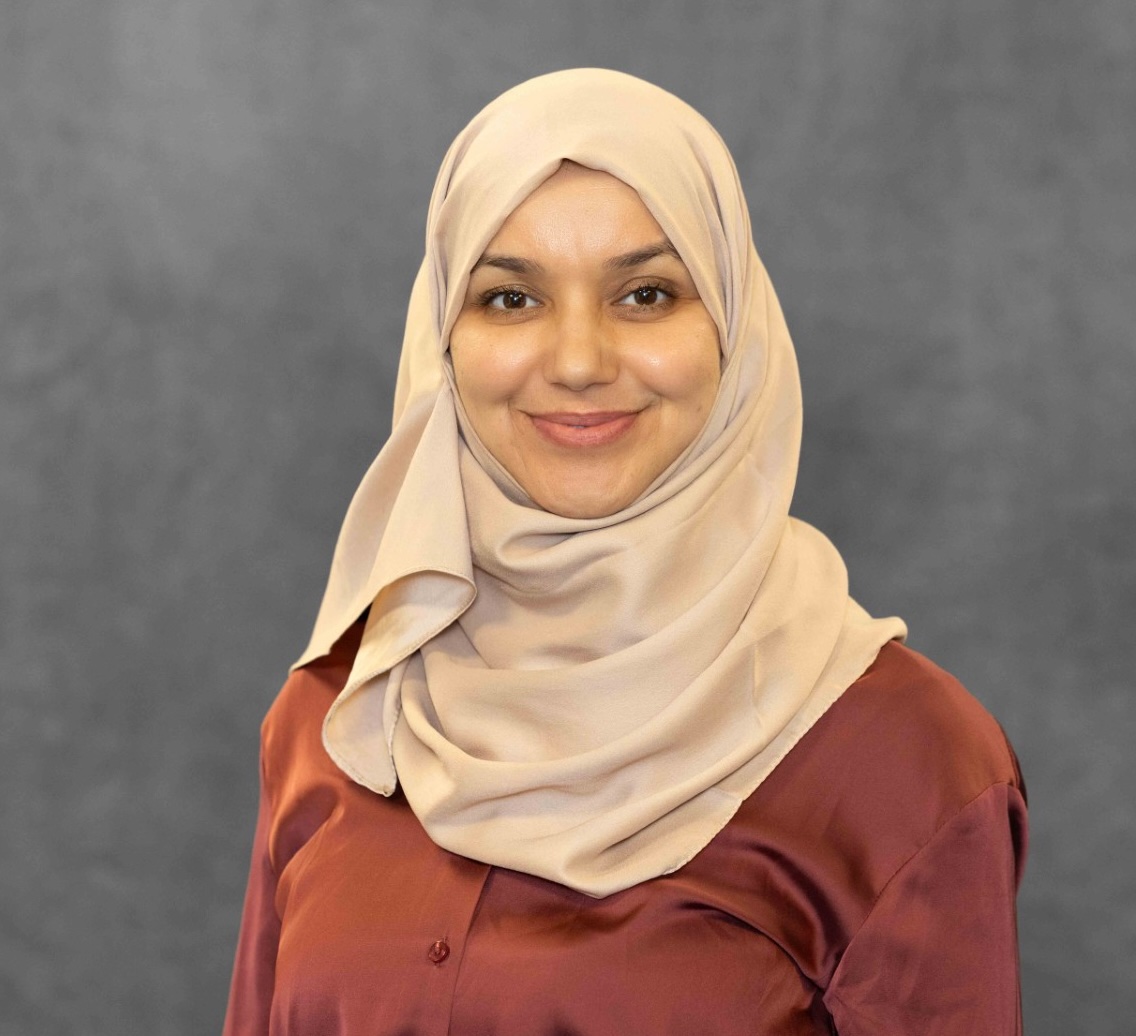
Leïla Nasraoui
Associate Professor of Telecommunications at the National School of Computer Sciences (ENSI), University of Manouba in Tunisia
1. Could you briefly introduce yourself and tell us about your academic and professional journey? What inspired you to pursue a career in research and innovation?
I am an Associate Professor at the National School of Computer Sciences (ENSI), University of Manouba, Tunisia, and a research fellow at the COSIM Research Lab at the Higher School of Communications (SUP’COM), University of Carthage, Tunisia. My academic journey started with an Engineering Degree in Computer Science from the University of Tunis El Manar, followed by a Master of Research Degree in Telecommunications, and a PhD in Information and Communication Technologies (ICT), both from SUP’COM in 2010 and 2015, respectively. I also obtained my Accreditation to Supervise Research in ICT from the same institution in 2022.
I joined ENSI in 2012 as a Teaching Assistant, later promoted to Assistant Professor, and ultimately Associate Professor. Alongside my academic career, I have had the opportunity to work with international research teams through collaborations and visiting positions in Canada, France, Ivory Coast, and the United States.
My inspiration to pursue a career in research and innovation is deeply personal. Growing up in the countryside, my path wasn’t easy; I used to walk several kilometers every day just to get to school. Living through those challenges instilled in me a deep determination to use my potential to improve the lives of people in rural and under-resourced communities. Today, I channel that purpose into research focused on closing one of this era’s greatest inequalities: the digital divide. By addressing the uneven global distribution of technology, my goal is to contribute to developing innovative communication networks that bring fast, reliable connectivity to underserved populations worldwide, so that location is no longer a barrier to opportunity.
2. Looking back at your career, what experiences, opportunities, or mentors have had the greatest impact on your professional growth?
Actually, the people I have had the opportunity to work with have had a profound influence on my professional growth.
My PhD laid the foundation for my research career. Under the guidance of my supervisors, Professors Mohamed Siala and Leïla Najjar, I learned not only the fundamentals of wireless communications, but also scientific rigor, ethics, and academic excellence. These are the values and skills I now strive to pass on to my own students.
A major turning point in my career was choosing to conduct my PhD in Tunisia. I remember that when attending international conferences, I was often met with surprise from both international colleagues and Tunisian scholars abroad because I was pursuing my doctoral degree at home. Looking back, I consider myself very fortunate to have built the foundations of my career here. Defending my thesis with 12 publications in internationally renowned conferences and journals proved that excellence is not bound by geography. This experience taught me that high-quality research can emerge from any environment when there is the right combination of determination, guidance, and vision – a conviction that continues to shape how I mentor young researchers and advocate for inclusive scientific progress.
Later, international research experiences opened new perspectives for me. My visiting research positions abroad were really valuable. These experiences allowed me to work in different research environments, exchange ideas with researchers from different backgrounds, and highlighted how cross-border exchange elevates scientific discovery.
3. In 2019, you were awarded the L’Oréal-UNESCO Maghreb Fellowship for Women in Science, recognising your contributions to research. How did this recognition influence your career journey, and what role do you think support programmes play in encouraging more women to pursue careers in science and technology?
Receiving the L’Oréal-UNESCO For Women in Science (FWIS) Maghreb Fellowship was a very important milestone in my career. At that stage, recognition of my research through such a prestigious program gave me additional confidence and visibility as a woman researcher working in science and technology. For me, the value of this recognition goes far beyond the award itself; it creates a deep sense of belonging to a global scientific community. In fact, that milestone has come full circle. Being invited to join the Expert Panel for the 2027 L’Oréal-UNESCO FWIS International Awards is a source of immense personal pride and a powerful reminder of how far a single opportunity can take a researcher.
I strongly believe that support programs like L’Oréal-UNESCO FWIS play a transformative role. They not only recognize past achievements, but also unlock future opportunities for young women to fulfill their potential, access mentors, build international collaborations, and step into leadership roles. Sometimes, that recognition is the encouragement a young researcher needs to realize she truly belongs in science. Once women receive these opportunities, I believe it is equally vital for them to use that platform to open doors for the next generation; something I am deeply committed to doing today through my work with my students and mentees.
4. Your research focuses on emerging technologies such as 5G and beyond systems, IoT, and intelligent communication networks. How do you see these fields evolving in the coming years, and what role can initiatives such as DIGITAfrica play in fostering collaboration and knowledge exchange among digital researchers?
We are moving toward communication systems that are significantly more intelligent, autonomous, distributed, and deeply integrated with AI. The evolution from 5G to 6G is not simply about enhancing performance metrics; it is about engineering solutions that address societal challenges, from sustainable mobility and energy efficiency to global connectivity and digital transformation. To achieve this, networks must become context-aware, adapting dynamically to shifting environments, and supporting massive device density.
At the same time, I believe that Africa has a pivotal role to play in this evolution. It is crucial that African scholars actively shape technologies designed specifically for local contexts and needs, rather than adopting external solutions.
This is why initiatives like DIGITAfrica are particularly important. By bridging researchers, institutions, and expertise across the continent, DIGITAfrica creates direct pathways for high-impact collaboration. It helps transform individual research efforts into stronger communities and sustainable networks of collaboration. Above all, its vision to establish a pan-African research infrastructure in digital sciences provides the foundation our research community needs to progress and lead globally.
5. What changes would you like to see in African research and innovation ecosystems to better support young researchers, especially women, in reaching their full potential?
To answer this question, I’ll draw on findings from a study we conducted at the start of the DIGITAfrica project. When mapping research infrastructure across the continent, we identified critical gaps: resources are heavily fragmented and unevenly distributed, funding for large-scale tools is scarce, technical maintenance capacity is limited, and national systems rarely connect with one another. As a result, our researchers often end up working in isolation.
To transform African research and innovation ecosystems to better support young talent, we must move from isolation to integration. That means establishing shared research networks, open-access computing resources, and joint regional initiatives that give young scientists the tools to build world-class careers without feeling compelled to leave Africa permanently.
When it comes to women, we must go beyond simple encouragement. It is not enough to invite women into science; we have to actively create the conditions for them to thrive. That means supporting them to lead research teams, secure major grants through targeted funding, and step into key decision-making roles.
6. What advice would you give to the next generation of researchers who aspire to pursue a career in research and innovation?
I think the next generation of researchers aspiring to pursue a career in research and innovation already possess passion, curiosity, and motivation, which, in my opinion, are essential starting points. However, opportunity is the catalyst rising researchers need most. My primary advice to them is not to wait for doors to open, but to actively chase opportunities and forge your own path. At the same time, don’t rush the journey. Research is a marathon, not a sprint, and meaningful contributions take time. There will be challenges, failures, and moments of doubt, but these are all part of the process. Therefore, perseverance and patience are key to a successful career in research and innovation. Most importantly, understand that your goal isn’t just to build a personal career, but to contribute to the global scientific community. So, avoid working in isolation and engage with researchers across different disciplines and borders.
We warmly thank Dr. Leïla Nasraoui for sharing her inspiring journey and perspectives with Voices from DIGITAfrica, and for highlighting the importance of expanding opportunities, connecting research communities and empowering the next generation of women in science.