
DIGITAfrica at the Global Digital Collaboration Conference 2026
From 1–3 September 2026, the Global Digital Collaboration Conference 2026 brought together leaders and experts from across sectors in Geneva to exchange perspectives on some of the key challenges shaping digital cooperation and trusted digital systems.
Within this international setting, DIGITAfrica contributed to the conference with the session “Scaling Trust: Sovereign Digital Public Infrastructure for Research, Education and Innovation in Africa,” co-organised by UNESCO and UNICC. The session brought together several project partners, including INRIA, CNR, the University of Cape Town, Sorbonne Université and Université Cheikh Anta Diop.
The session provided an opportunity to present the DIGITAfrica project, its mission to lay the foundation for a future pan-African Research Infrastructure for Digital Sciences, and the work being carried out to turn this mission into practice.
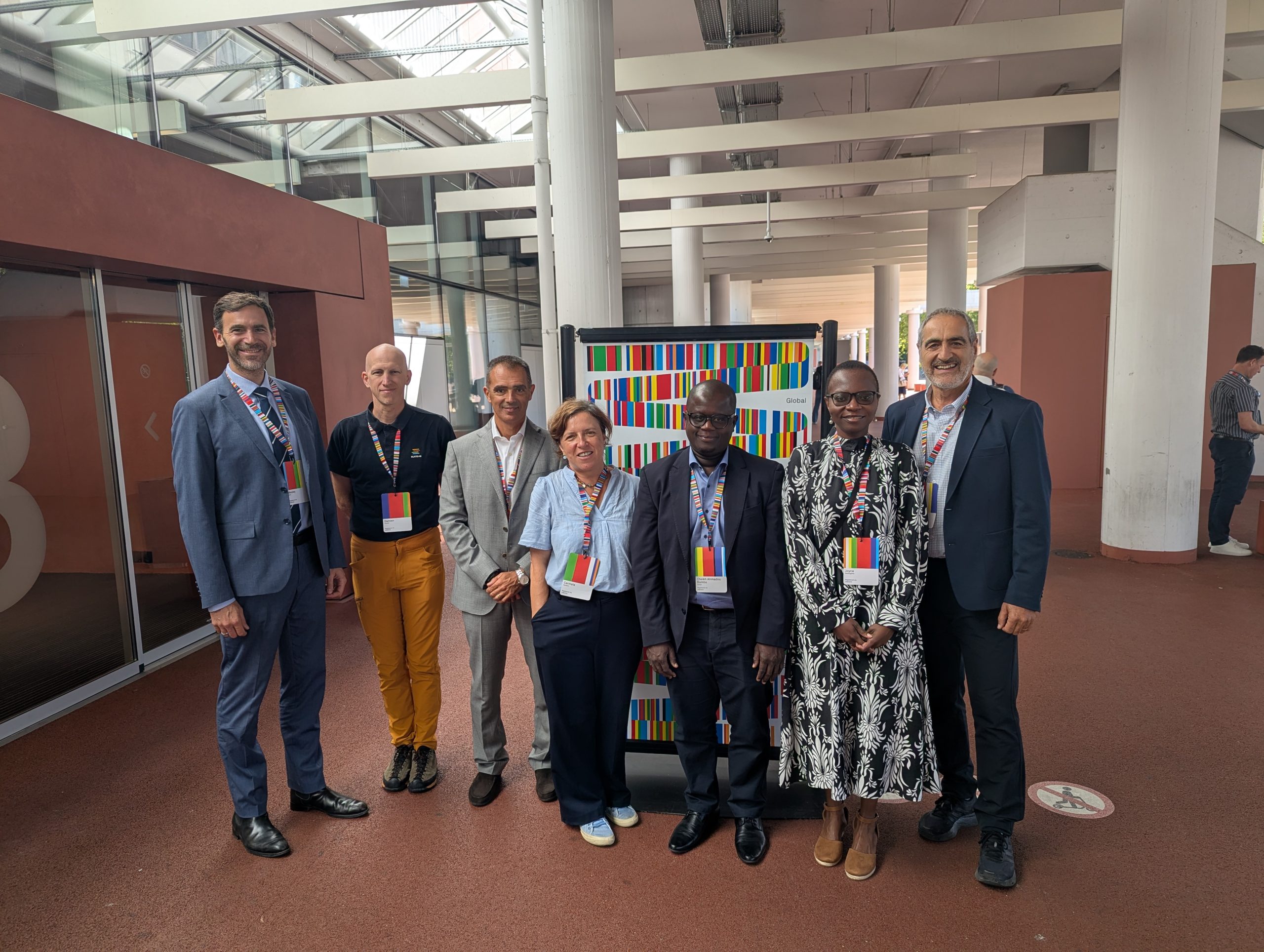

The discussion highlighted several dimensions of the project, from the development of two complementary Blueprints for Edge AI and Heterogeneous Networking to activities focused on capacity building and knowledge exchange. Together, these efforts aim to strengthen research capabilities and foster collaboration across African institutions, while contributing to the foundations for a future research infrastructure adapted to the needs and priorities of African research communities.
Building on these concrete activities, the conversation also addressed the broader challenge of connecting and scaling research infrastructures across institutions and countries, and what this means for their future development.
A key point emerging from the discussion was the importance of long-term sustainability:
“Getting a research infrastructure up and running is one thing; maintaining and sustaining it over time is another.”
The exchange highlighted that research infrastructure is not only about establishing technical capabilities, but also about considering the conditions needed to maintain, evolve and sustain them over time. It therefore provided an opportunity to reflect on the technical and institutional dimensions that will shape the future of research infrastructures as they grow and scale.
DIGITAfrica would like to thank the partners for their contributions to the session and all participants and conference organisers for contributing to this valuable exchange.